
Dasteck ChemicalsYantai Dasteck Chemicals Co., Ltd.
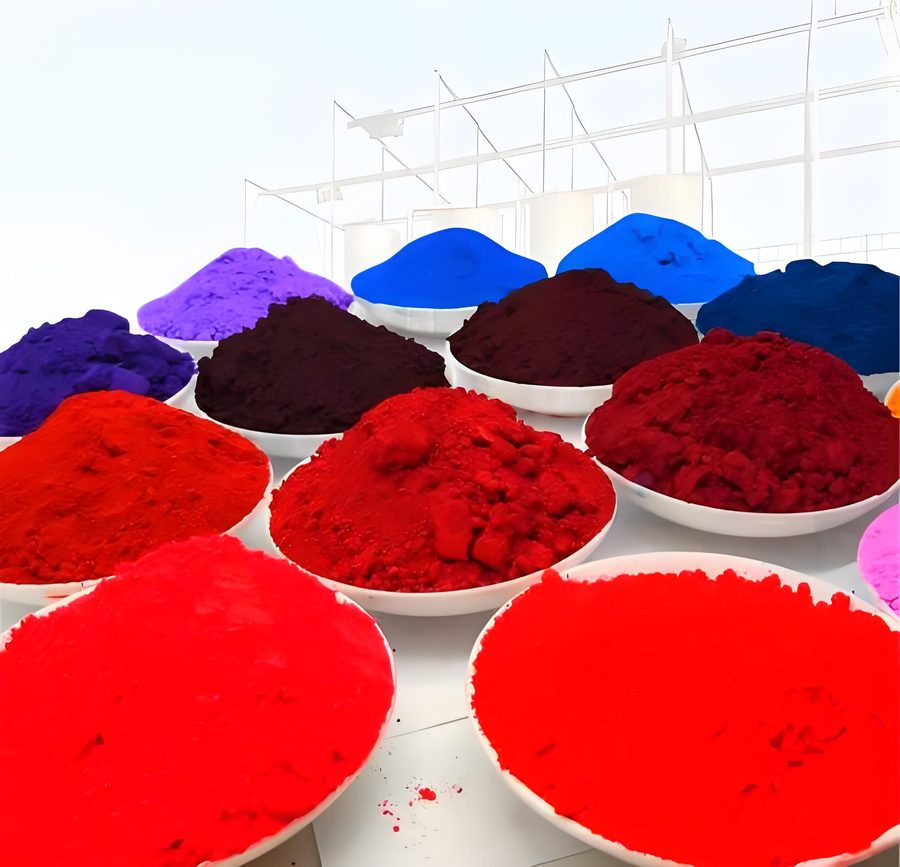
Core causes of over-reduction with Thiourea Dioxide: excessive reduction potential, slow potential decay, excessive alkalinity/temperature and overdosing; solutions: controlled dosage, blended reducing agents, addition of reduction inhibitors, lowered alkali & controlled temperature plus potential monitoring via combined measures.
High reduction strength & elevated potential
Under alkaline conditions, THIOUREA DIOXIDE delivers an ORP of -1000 ~ -1370 mV, far stronger than Sodium dithionite (Sodium Hydrosulfite) (hydrosulfite). Its potential declines slowly, which readily over-reduces anthraquinone dyes (especially blue & yellow anthrone varieties) into non-chromophoric structures, resulting in dull shade, poor colour yield and inferior fastness.
Triggering processing conditions
Over-reduction risk rises sharply when: pH>11, temperature>65℃, THIOUREA DIOXIDE dosage>1/5 of Sodium dithionite (Sodium Hydrosulfite), or prolonged reduction holding time.
II. Remedial Solutions (in priority order)
1. Blended reducing agent system (most widely applied)
- Primary formula: 70%~75% Sodium dithionite (Sodium Hydrosulfite) + 10% THIOUREA DIOXIDE
2. Reduction inhibitor addition (high-efficiency measure)
3. Precise process parameter control
4. On-line ORP monitoring (precision control)
5. Dye selection & process optimization
- Prefer indigoid & sulfur dyes; use blue/yellow anthrone anthraquinone dyes with caution (highest over-reduction tendency).
- Adopt low liquor ratio, rapid pre-reduction and immediate padding/dyeing to shorten contact duration between dye and THIOUREA DIOXIDE.
III. Reference Standard Dyeing Recipe
Dye: X g/L, Caustic Soda: 6 g/L, Sodium dithionite (Sodium Hydrosulfite): 3 g/L + THIOUREA DIOXIDE: 0.5 g/L, Sodium Nitrite: 0.3 g/L; processing temperature:55℃, pH=10.8, pre-reduction holding:12 min.
V. Summary of Key Control Points
1. Blended reducer priority: THIOUREA DIOXIDE ≤1/5 of Sodium dithionite (Sodium Hydrosulfite) for stable potential.
2. Mandatory inhibitor: 0.3~0.5 g/L sodium nitrite (first choice for anthraquinone series).
3. Strict process limits: pH 10.5~11.0, temperature 55~60℃, short pre-reduction period.
4. Real-time ORP control: maintain -750~-850 mV; adjust parameters promptly below lower threshold.